Monday, December 6, 2021

Illuminated Manuscript

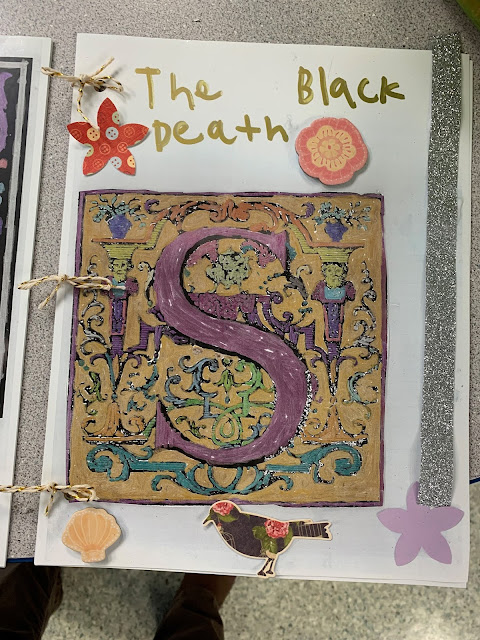
As a culminating  project for our integrated studies unit on the Middle Ages, the second graders wrote research papers on a related topic of their choosing. Their finished papers were published in a class illuminated manuscript.


Becoming published authors is an educational adventure unlike any other. It builds students' confidence by signaling to them that they and their work are worth sharing and celebrating with others. It's a reward for their hard work, but also an acknowledgement that they made something new, incredible and worthwhile. They aren't just members of the audience anymore – they're creators, capable of doing anything they put their minds to. We shared our published work with the first grade class via Zoom.


Being able to hold their finished classbook in their hands and, better yet, hand it over to someone else to read and enjoy is a thrilling experience. It makes them feel recognized as authors and as capable people, not just kids – both by their peers and by their teachers and parents.


Castle Tour

The Dragon Crafter's Castle Tour

        As part of our integrated studies unit on the Middle Ages, the second graders built a life sized cardboard castle out of recycled materials. They used all the information they learned about the various parts of a castle to build and decorate our class castle. The results were spectacular and we all had a wonderful experience throughout the building process. Please enjoy the video we created to share our castle creation with others.


Tuesday, November 2, 2021

What is MakerSpace, anyway?


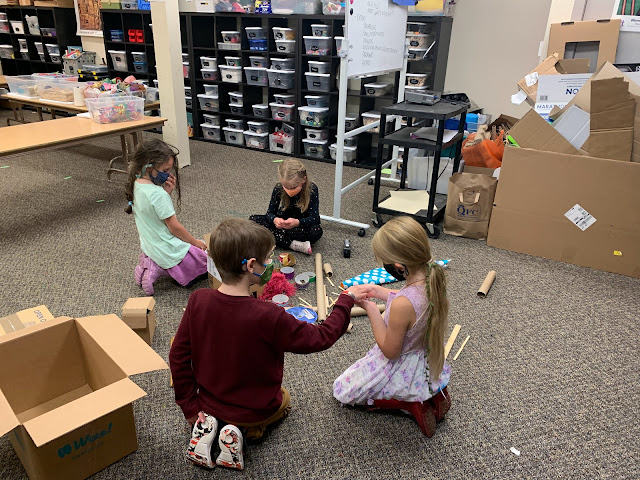
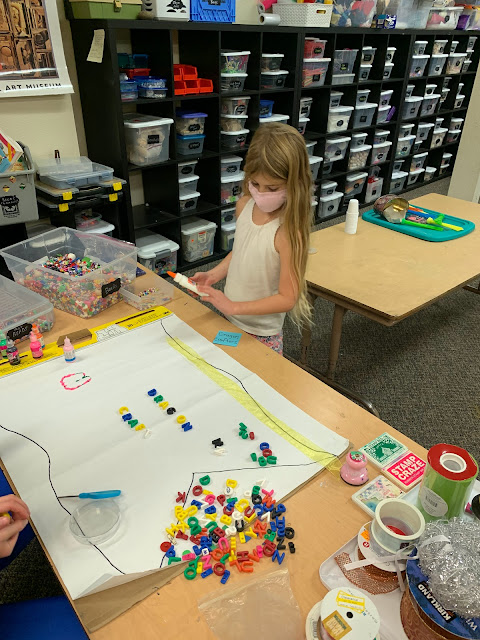
MakerSpace is a place where children explore, create new things, or improve things that already exist. These spaces foster open-ended learning. Children naturally tinker; they build things and take things apart – especially when they're allowed the freedom to work without direction. MakerSpaces encourage natural creativity.


Students practice critical thinking skills, challenge their imaginations, and come up with solutions to real-world problems.


MakerSpaces are really helpful for STEAM related activities. They are also safe places for students to fail. Students learn by trial and error, improving with each attempt.


At the core of a MakerSpace is the maker mindset of creating something out of nothing and exploring your own interests. 


Sunday, October 24, 2021

Integrated Studies

In today's global economy, centered on the development and exchange of knowledge and information, successful people are fluent in several disciplines and comfortable moving among them. Creativity, adaptability, critical thinking and collaboration are highly sought after skills. Integrated studies helps to develop those skills in the classroom. 

Integrated Studies allows students to develop a meaningful understanding of the complex associations and influences within a topic.

The second graders are immersed in an integrated studies unit on the Middle Ages.


We used a backdrop of The Middle Ages to create our classroom Code of Chivalry. We practiced our cursive handwriting skills by signing the code with a real quill pen and ink.


We continued our exploration of knighthood by reading a variety of books centered around knights. We researched coat of arms and each student created their own heraldic achievement, which consists of a shield, supporters, a crest, and a motto. 


When the project was complete we had an accolade, which is a ceremony to confer knighthood.


One of our classmates extended the lesson, by bringing her family's coat of arms from home to share with the class.


We learned about the Feudal System and then took part in a visual/kinesthetic experience, where each student was assigned a particular role in the system (Queen, noble, vassal or peasant). Each student began with 10 gold coins. Each peasant gave the vassals 6 coins for the protection of their crops. From each peasant's payment, the vassal kept one piece and gave 5 to his lord, the noble. From each vassal's payment of fidelity, or loyalty, the noble kept 2 pieces and gave three to the queen. In the end, the peasants had 4 coins; the vassals, 12; the nobles, 22; and the queen, a whopping 46. As you can imagine, the peasants were not happy! We had a great discussion on the fairness of this system.


We used our newfound knowledge to create a Feudal System pyramid with a partner.


STEAM (Science, Technology, Engineering, Arts, and Math) activities enrich student learning by providing learners with different ways to engage with concepts. The second graders worked on the Tall Tower challenge. They used paper tubes and 2 feet of masking tape to make the tallest free-standing tower that they could.


We extended our discussion of the Feudal System by reading the poem: 
The Four Alls:
The peasant who worked for all
The knights who fought for all
The priests who prayed for all
The king who ruled all

Each student selected one of the "alls" and created a diorama to depict the life of that group.


Our exploration of the Middle Ages continues. Stay tuned for an upcoming blog showcasing the building of our Classroom Cardboard Castle!

Friday, October 8, 2021

More Math Manipulative Mania!

To gain a deep understanding of mathematical ideas, students need to be able to integrate and connect a variety of concepts in many different ways. Clements (1999) calls this type of understanding "Integrated-Concrete" knowledge. The effective use of manipulatives can help students connect ideas and integrate their knowledge so that they gain a deep understanding of mathematical concepts.

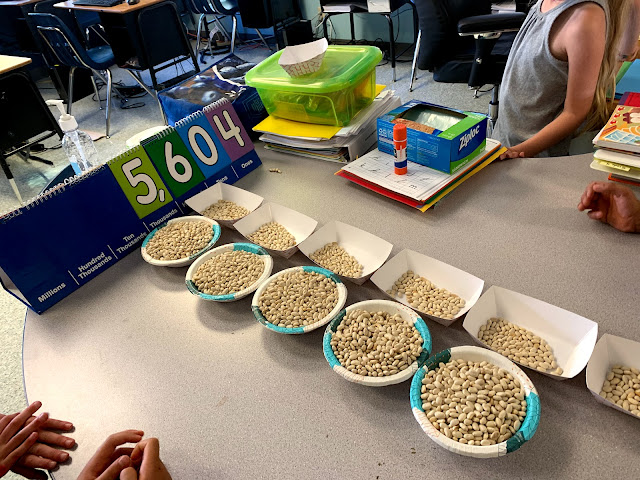
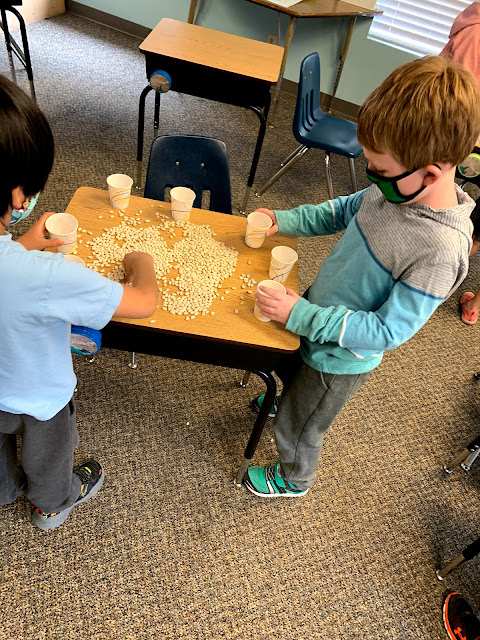
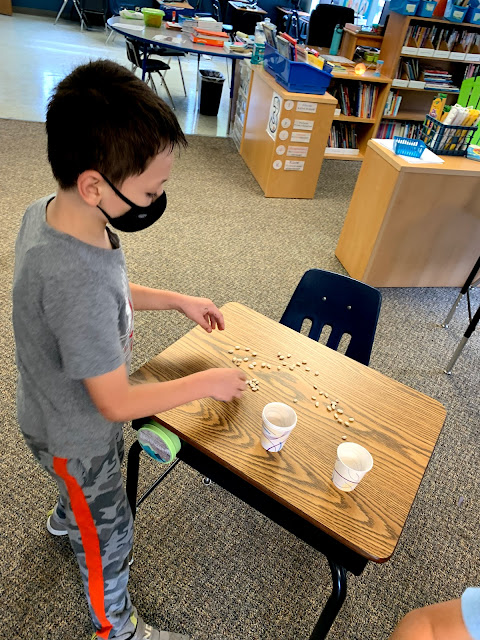
The Dragon Crafters listened to the book, Sir Cumference and All the King's Tens: A Math Adventure. We then became "bean counters" to determine how many guests were attending our feast. The students brainstormed many ways we could count all of the beans. We discussed the pros and cons of each suggestion. After much discussion, the students agreed that we should count 10 beans into small cups; collect 10 cups and combine them into a tray; collect 10 trays and combine them into a bowl. We were then able to count our beans by thousands (bowl), hundreds (tray), tens (cups) and ones (single beans). Our total number of beans was 5,604!


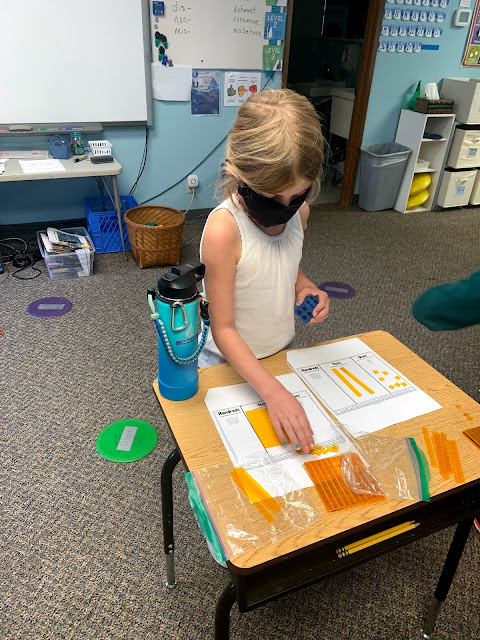
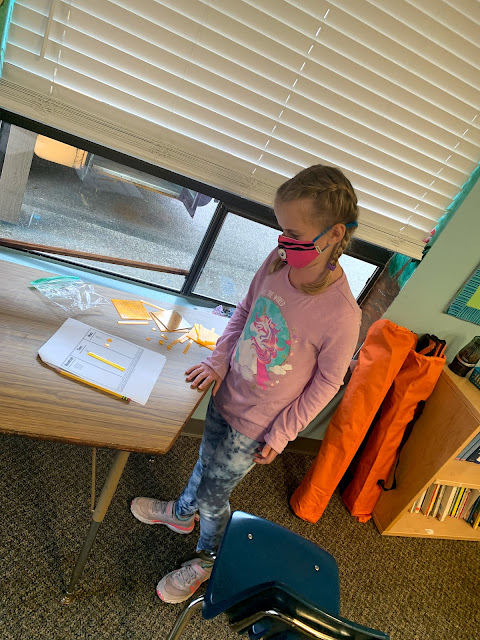
The Dragon Crafters were then introduced to Base Ten blocks. Base Ten blocks provide hands-on ways to learn place value, number concepts, operations, measurement, and much more! They help students physically represent what they’re learning so they can develop a deeper understanding of the meaning of each concept. By building number combinations with Base Ten blocks, students ease into the concept of regrouping or trading and can see the logical development of each operation.


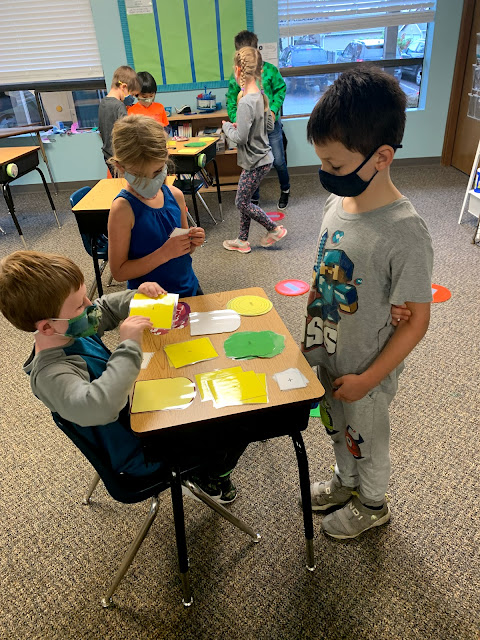
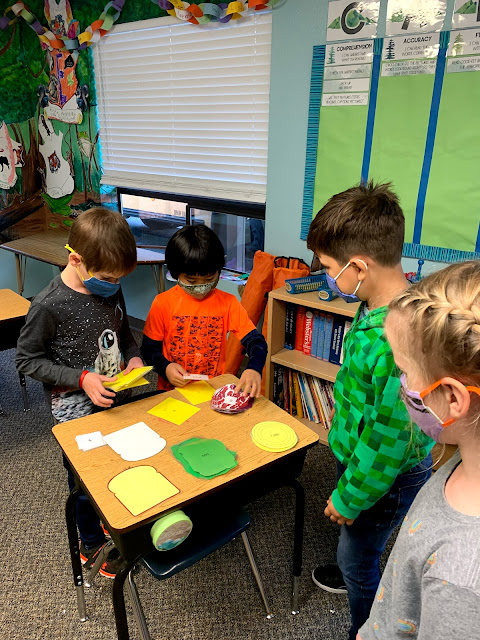
The second graders used the skills they have gained in place value to open their own "Place Value Sandwich Shop." Each student had the chance to be both a customer and a sandwich maker. 


Thursday, September 23, 2021

Fun with math manipulatives!

When students manipulate objects, they are taking the first steps toward understanding math processes and procedures. Manipulatives help students connect ideas and integrate knowledge so they gain a deep understanding of mathematical concepts.

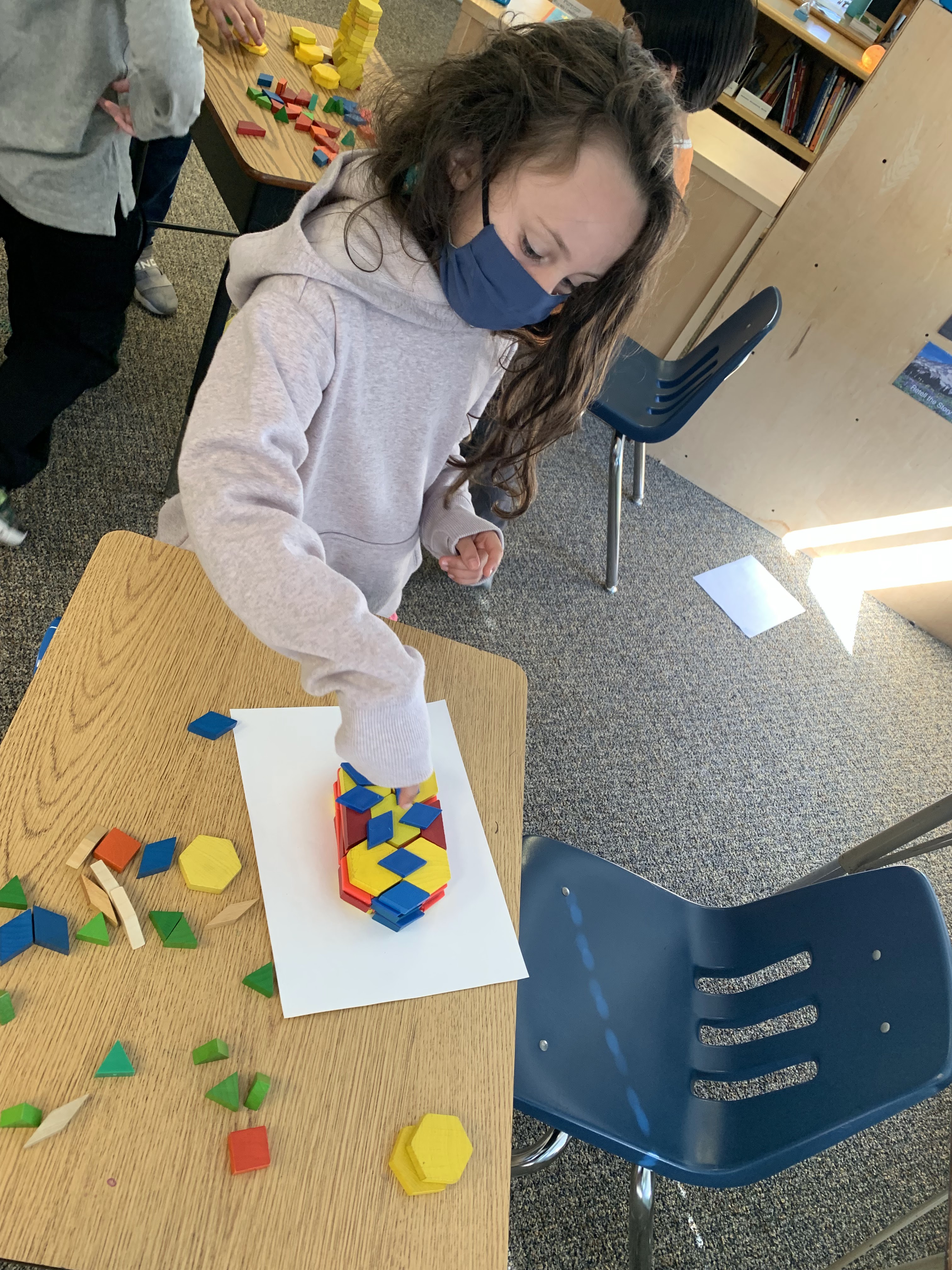
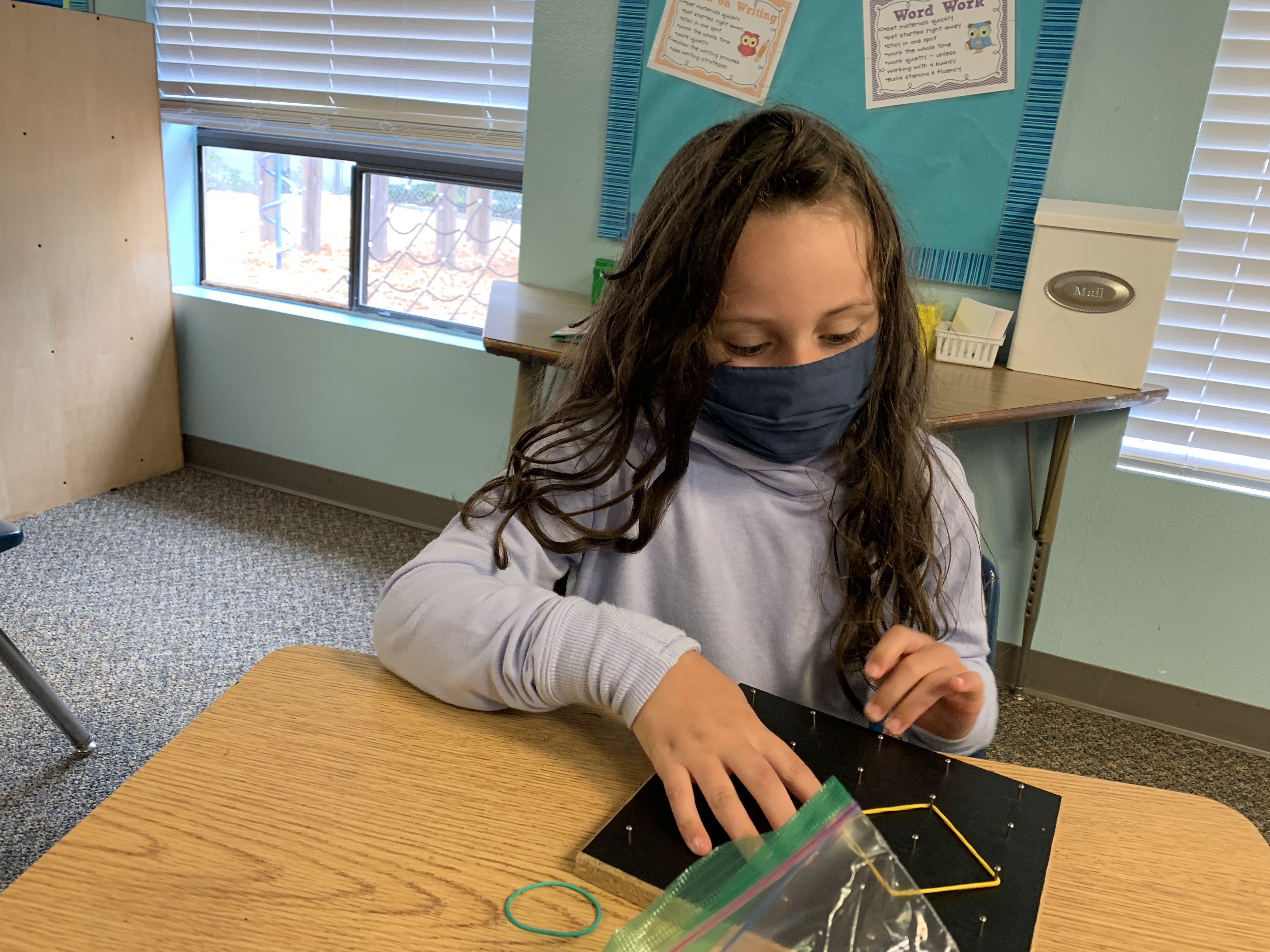
At the start of the year, the students have a chance to explore some of the math manipulatives that we will be using all year. The Dragon Crafters spent some time getting to know pattern blocks and geoboards. 


Class Auction

Student-Centered Learning Teachers encourage student-centered learning by allowing students to share in decisions, believing in their capaci...